The Abduction of Mary Wharton – Goldsborough Hall’s Heiress Who Made History
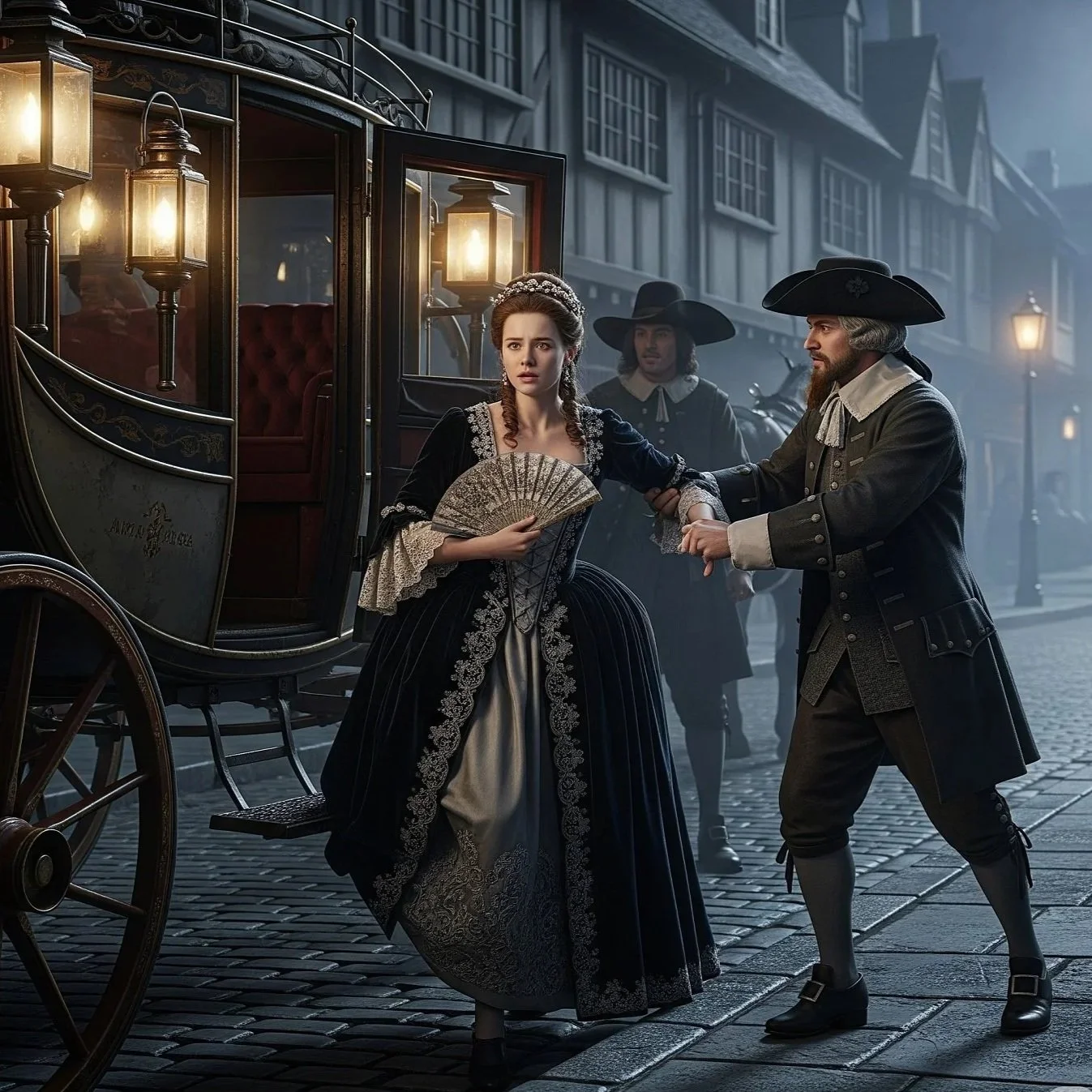
A reconstructed image of Mary Wharton’s abduction from a London street
It is hard to imagine now, as you walk the tranquil grounds of Goldsborough Hall, that one of its early heiresses was once at the centre of one of the most sensational scandals of 17th-century England. The story of Mary Wharton – orphan, heiress and victim of abduction – is one of courage, tragedy and eventual peace.
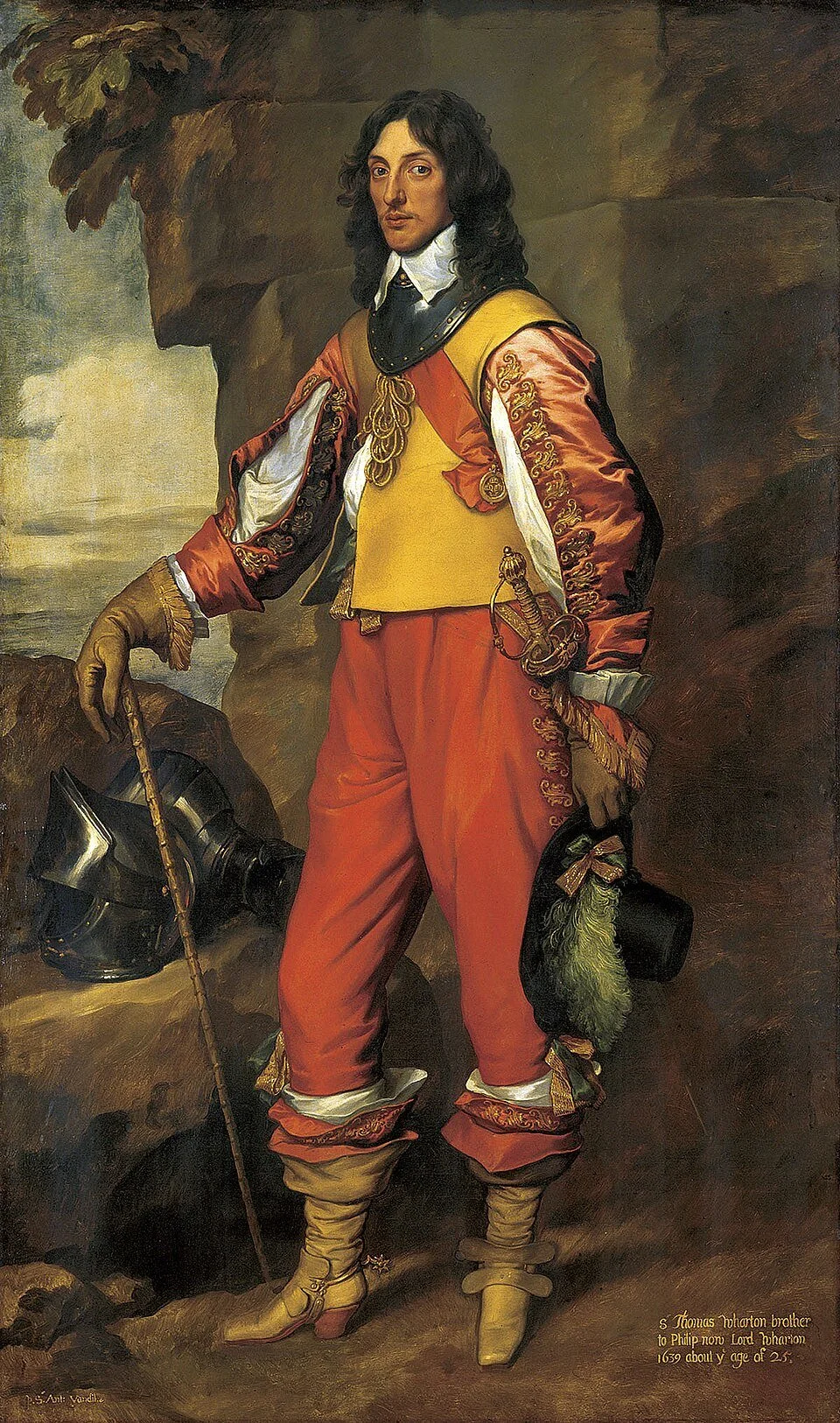
Mary’s grandfather, Sir Thomas Wharton by van Dyck
An Heiress in Her Own Right
Mary Wharton was born in 1677 into immense wealth. Her father, Phillip Wharton (c1652-85), was the nephew of Lord Wharton, one of the richest mine owners in England, and son of Sir Thomas Wharton (c 1614-1684, pictured). Her mother, Elizabeth Hutton (1655-1684), was heiress to the vast Goldsborough estate – built by her great-grandfather Judge Sir Richard Hutton in the late 1500s.
By the age of eight, Mary had lost both parents and her grandfather Sir Thomas Wharton, inheriting both the Wharton fortune and the Hutton estates. Her income of £1,500 per year made her one of the wealthiest orphans in the country – the equivalent of around £172 million today.
Did You Know?
In 1685, £1,500 would buy 278 horses, 360 cows and 16,000 days of skilled tradesmen’s labour. The modern equivalent of her fortune is estimated at over £172 million per year, with a further £115,000 in cash and effects.
A Family Torn by Loss
Phillip Wharton’s will instructed that his daughter be cared for by her great-aunt Anne Byerley (née Hutton, pictured below) of Goldsborough rather than by his young second wife, Angelica. Mary grew up in her great-aunt’s protection – but tragedy was not done with her.
The Night of the Kidnapping
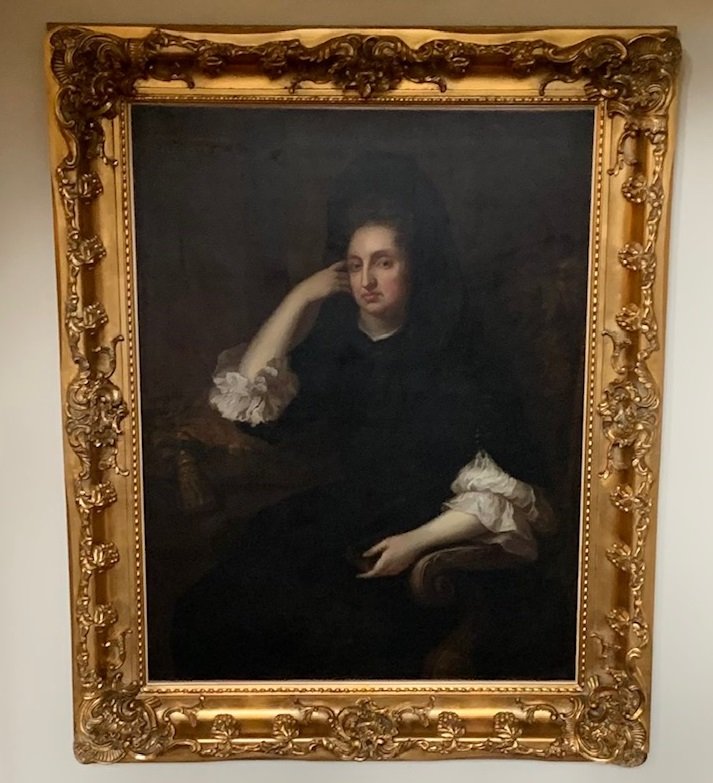
Anne Byerley, Mary’s great-aunt, whose portrait is at the Hall
In November 1690, 13-year-old Mary was returning from a dinner party in London with her great-aunt and cousin when a coach drew up suddenly in Queen Street. Before anyone could react, Mary was seized, thrust into the carriage and carried off into the night. The culprit was The Hon James Campbell of Burnbank, the fourth son of the 9th Earl of Argyll.
He and two accomplices, Archibald Montgomery and Sir John Johnsto, had plotted to abduct Mary and force her into marriage. That night, in a Westminster lodging house, a clergyman named Parson Clewer performed the ‘marriage ceremony’ against Mary’s will. The next day she was compelled to write a letter to her aunt, claiming she had married Captain Campbell willingly.
A Daring Rescue and a Public Trial
The Byerley family immediately acted. Anne’s son, Hutton Byerley, obtained a Royal Proclamation offering a reward for information. Within days, one of Campbell’s accomplices was betrayed for £50, and Mary was found and rescued.
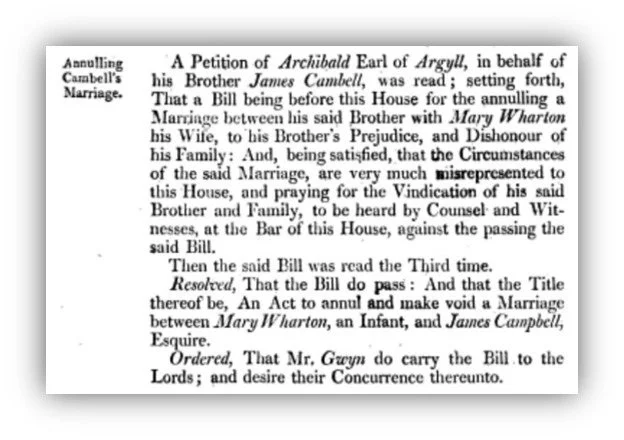
The Parliamentary Act of Annulment of the marriage
Sir John Johnston was tried at the Old Bailey for his part in the crime. Mary gave evidence, bravely declaring she had been ‘constrained by fear and surprise’ and had never met Campbell before that night. Johnston was convicted and hanged at Tyburn in December 1690 – an event that shocked society.
Parliament later passed a private act to annul the forced marriage, with Royal assent granted on 20 December 1690. Meanwhile James Campbell escaped to Scotland and was never punished.
The Forced Marriage Act of 1690
The Byerley family’s campaign for justice led to a Private Act of Parliament that annulled Mary’s marriage to Campbell – one of the earliest legal recognitions that a marriage without consent was invalid. It laid early foundations for the protection of women’s rights in Britain centuries before such ideas became widespread.
Whispers and Legacy
Rumours later circulated that Mary had borne a child by Campbell, a boy named Thomas Wharton who was supposedly taken to Scotland and later emigrated to America. Though romantic in speculation, there is no historical record of such a child. Mary’s life, however, found calm after the storm. She married her cousin once removed, Robert Byerley, son of her guardian Anne and settled at Goldsborough Hall. Their marriage appears to have been one of stability and quiet contentment.
A Family Remembered
The peace did not last for everyone involved. In 1695, Hutton Byerley, who had fought for Mary’s freedom, was killed in a duel in London, a fatal consequence of his role in bringing Sir John Johnston to justice.
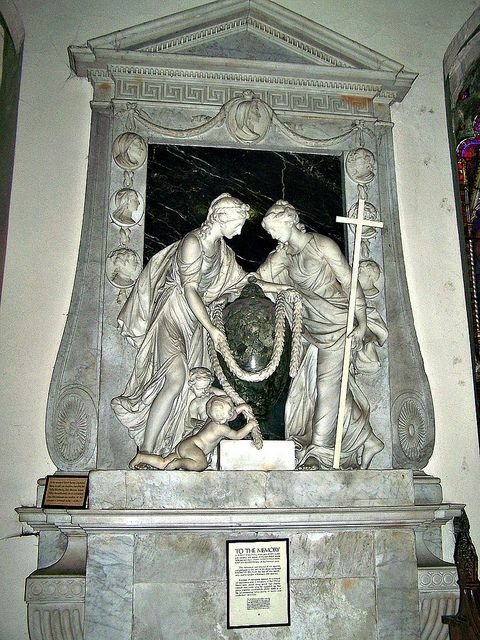
The Wilton Memorial of the Byerleys in St Mary’s Church
Mary and Robert went on to have five children, none of whom married. When the last of them, Elizabeth Byerley, died, the Goldsborough estate was sold to Daniel Lascelles in the 1760s.
To honour the family’s memory, the celebrated sculptor Joseph Wilton was commissioned to create two marble figures, Faith and Charity, which still stand in next door St Mary’s Church, Goldsborough. Their urn bears six portrait medallions of Mary, Robert and their children – a moving reminder of a woman who endured so much at so young an age.
From Turmoil to Tranquillity
Mary Wharton’s life reads like a gothic novel – orphaned heiress, abduction, courtroom drama and eventual redemption. Yet here, at Goldsborough Hall, her story finds its most poignant conclusion. Amid the peaceful gardens and the quiet grandeur of the Hall she once called home, her spirit endures as part of the rich tapestry of Goldsborough’s history.
Visitors to Goldsborough Hall and the village church can still see the Byerley memorial today – a graceful tribute in marble that keeps Mary Wharton’s remarkable story alive within the very place she once called home.